
Updating content is often one of the lowest of low-hanging fruit. Boost traffic significantly in minutes.
Writing more blog posts is not *always* the best way to get more traffic.
In this short article, I cover a few SEO tips and tactics I've used personally to get more traffic for my website by simply tweaking, editing, and updating existing content.
Tactics included:
1/ Updating the meta title and description to increase click-through rates
2/ Refocusing your top-performing content around even higher-volume keywords
3/ Rewriting or extending articles to push them to the front page
Let's deep dive those 👇
#1 Get more traffic by updating the meta title and description
The quality of your title and meta description determine how many people click through to read your content.
After all, the title/description is pretty much all the information a Google searcher has to go on when deciding what to click:

So if they don’t click through to your blog post, it usually means:
1/ Your title and meta description don’t match the search intent very well.
Perhaps, like in the example above, I Googled “free chatbot” and got a “complete guide to chatbots”.I'm not 100% sure the complete guide will give me what I'm looking for, so I'll likely choose another result.
2/ Your title and meta description are not designed well.
Sometimes your copy is just unconvincing (e.g. if you're like me and often write them in a rush).The purpose of every title and description is to convince the reader to read the main article—don’t forget it needs to be convincing.
3/ Your title and meta description are bland
I find this SO often when I'm updating content for my clients.Their metadata looks just like every other search result above and below it—nothing unique that screams “click me, not them”.
So, how do we fix these three issues?
The first step is to identify low-performing content in Google Search Console.
If you’ve looked at Google Search Console recently, you’ll have noticed that the “Performance” tab shows click-through rate.There are two columns beside the search queries you’re ranking for:

Impressions show how many times your page was seen in Google.Clicks show how many times it was clicked.CTR = (clicks / impressions) × 100.
A low CTR typically indicates low performance—meaning your title and description aren’t intriguing enough.
Once you've identified the issue, tweak titles and descriptions so they better match search intent and feel more compelling.
It's short and sweet but can have a significant impact on traffic volume—win-win.
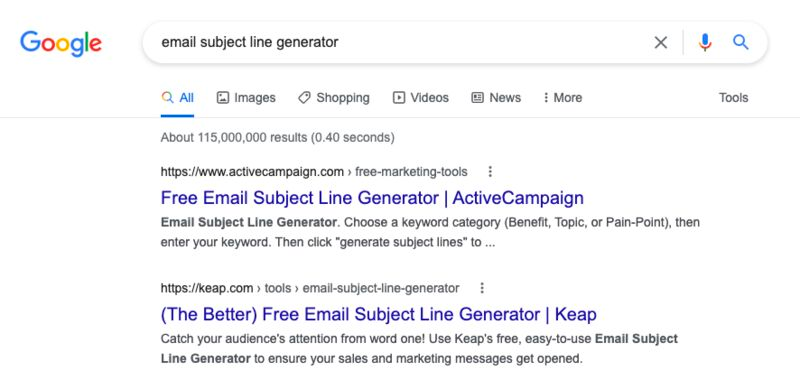
Here's one of my favourite examples of standing out in the SERPs:
#2 Get more traffic by refocusing high-performing content around higher-volume keywords
Sometimes content performs well—but what if it could be 10x better?
Case in point:
I wrote an article around the keyword “customer touchpoints”.
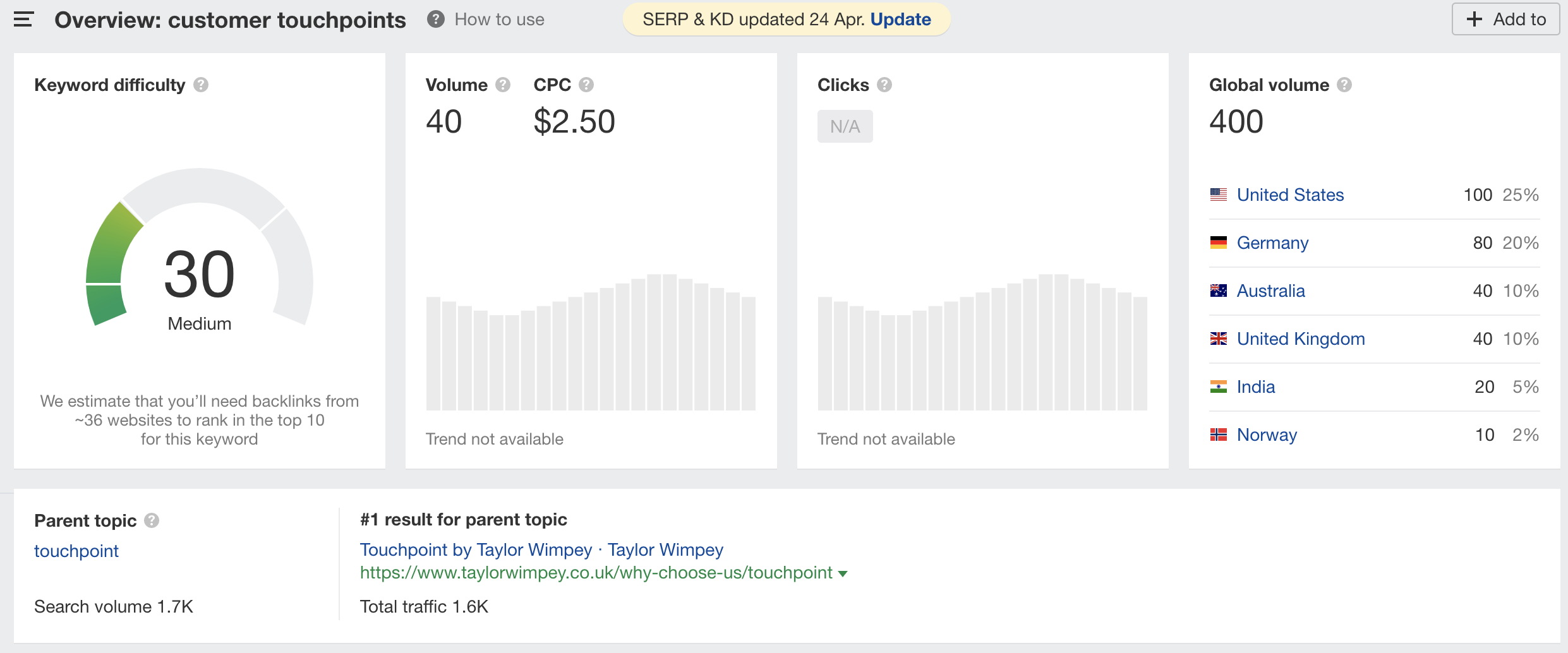
It did well, earning 1.5K+ organic hits a month on an average month.
However, I discovered it could be doing much better if reoptimized for a broader, higher volume keyword, 'touchpoint'.
Lucky for me, SEO tool Ahrefs has a useful little feature called ‘parent topic’.
Parent topic helped me realise I was ranking for a sub-keyword and not the core keyword, ‘touchpoint’, which was receiving 5x the search volume each month.

I quickly updated the URL, title and keywords within the page to reflect a greater focus on ‘touchpoint’, but also made sure we wouldn’t lose the traffic from 'customer touchpoints' by also keeping the keyword density high.
And, what do you know?
Within 30 days the article at 1.5x the traffic volume and I fully expect that to continue to rise as the changes are acknowledged further by Google.
#3 Get more traffic by refreshing the actual substance of your content (rewrites and extensions)
Adding new paragraphs, rewriting bits so it's clearer and making sure you're linking to best available resources can all improve decaying or underperforming content.
I recently updated an article for a client that was driving 3,000 visits per month. I re-wrote the title and section titles to include the core keywords and added a new section. It took around an hour.
Guess what? That article now pulls in 5,000 monthly visits. Easy win.
Why update old content?
You want to update your content for a couple of reasons:
1/ Google biases towards up-to-date content, especially on non-evergreen topics.
It’s understandable that you don’t update an article titled ‘definition of a cloud’ (yes, I looked up at the sky for inspiration) every year, but you would expect an article on the topic of ‘marketing industry trends’ to be renewed fairly often.
With that in mind, freshness is an important ranking factor to take into account for a large subset of your content.
2/ Your competitors may be continuously improving their content (making it longer or better in someway) so that it outranks yours. To stay competitive, you need to update yours as well.
Why update old content?
1/ Google prefers freshness on non-evergreen topics.
You wouldn’t update “definition of a cloud” every year—but “marketing industry trends” should evolve.
2/ Competitors constantly improve their content—so should you.
Which content should you update?
All content falls into three categories:
1/ Content that slipped from top 5 rankings.
2/ Content stuck on page 2.
3/ Content that never ranked—often due to weak intent matching.
The biggest short-term wins come from categories 1 and 2.
John Bonini has GOAT logic on this:
Boom. That’s it for today, folks.
Why not give your next SEO play a break from writing, writing, writing?
Ben ✌️


